With thanks to Dame Fiona Powrie for sharing her perspective on this year’s Nobel Prize
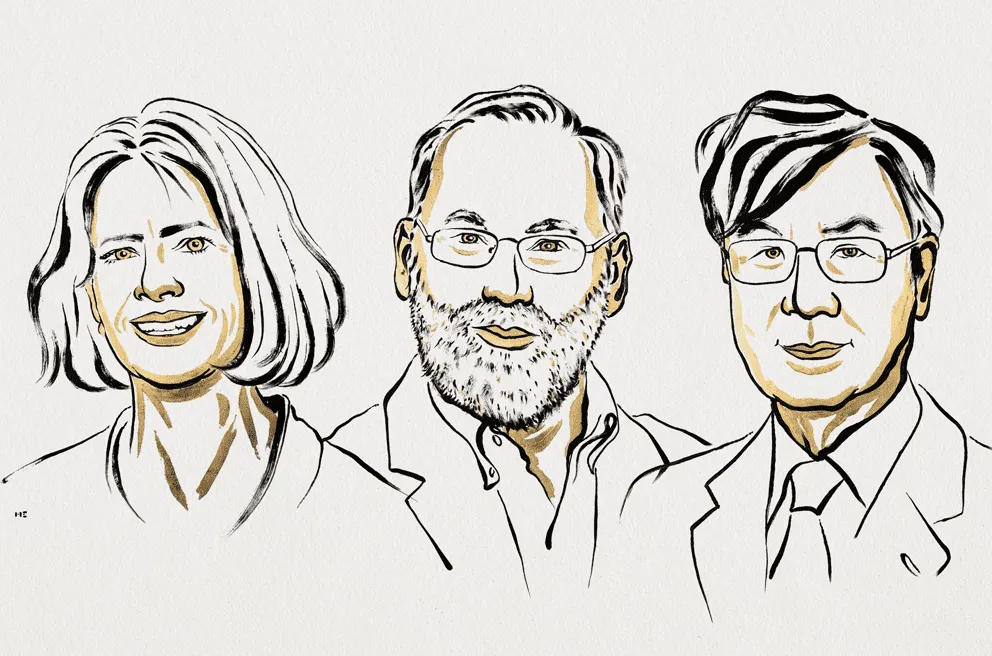
The decision to award the 2025 Nobel Prize in Physiology or Medicine to Mary E. Brunkow, Fred Ramsdell, and Shimon Sakaguchi has been greeted with excitement across the global immunology community. By honouring their work on peripheral tolerance, this prize pays tribute to the decades of persistence required to resurrect a concept once considered so unfashionable it was dismissed outright.
“It’s incredibly close to my heart,” says Dame Fiona Powrie, head of the Kennedy Institute here at Oxford. As a leading immunologist whose career has unfolded in parallel with the rise of T-reg biology, she takes us back to the start of her DPhil in Don Mason’s group at the Dunn School. “There were only a handful of us working on what we then called dominant tolerance—the idea that immune cells could actively suppress other immune cells. People used to say, ‘Didn’t anyone tell you suppressor cells are dead?’”
Fortunately, as Prof. Tom MacDonald puts it, “rodents do not read editorials in eminent journals”. In his seminal 1995 paper, Sakaguchi finally managed to isolate a population of CD4+ T-cells expressing the surface marker CD25 (the alpha chain of the IL-2 receptor), that prevented the development of autoimmunity in Balb/c athymic mice. These were the elusive “suppressor T cells” of the 1970s, rebranded by Sakaguchi into the “T-reg cells” of today. In back-to-back publications with Powrie’s group, CTLA-4 was identified as an additional marker of these cells.
Why now?
CTLA-4 has had its own time in the spotlight, as a target of the immune checkpoint inhibitors which won the 2018 Nobel Prize. Why then, has it taken the Nobel Association so long to recognise T-regs?
According to Prof. Powrie, the delay reflects a familiar dynamic in Nobel history. “Concepts often aren’t recognised until they show clinical utility,” she explains. “Checkpoint blockade is a perfect example—CTLA-4 and PD-1 were discovered as fundamental regulators of T-cell activation long before anyone imagined they’d revolutionise cancer therapy.” Although Treg-based interventions are still in early development, Brunkow and Ramsdell’s identification of FOXP3 as a lineage-defining T-reg marker have irrefutably established T-regs as essential for immune regulation. Deficiencies in FOXP3 cause IPEX syndrome, a severe autoimmune disorder in children that is fatal if untreated.
To fully appreciate their work however, we must first think back to late 1940s America, where the Manhattan Project was fully underway. There, researchers had noticed a peculiar new mouse strain where the males went on to develop serious autoimmune disease. Fortunately, these mice were considered peculiar enough to warrant maintaining the line for the 45 years it took before their X-linked autoimmunity piqued the interest of Brunkow and Ramsdell. They set out to identify the mutation underlying this autoimmunity – no small feat in this pre-NGS era. Eventually, they landed on a 2-base frameshift in a previously uncharacterised gene, which they christened Foxp3. Not long after, Brunkow and Ramsdell demonstrated mutations in FOXP3, the human homolog to mouse Foxp3, were responsible for the severe X-linked autoimmune disorder IPEX syndrome in children. Sakaguchi’s lab united these two lines of research, demonstrating this CD4+CD25+ T-reg cell population that Sakaguchi had characterised was the only T cell subset expressing Foxp3.
Early-phase trials of T-reg based cell therapies are now underway for various autoimmune diseases. “Some might argue the prize came slightly before clinical application,” Powrie notes, but “I am glad they have acknowledged such a bold and foundational concept”.
Promising, but not without difficulty
In fact, work from Powrie’s own lab has shown these CD4+CD25+ T-reg cells to reverse mouse models of established colitis. The effects were so dramatic, she recalls, “you almost didn’t need statistics. These cells would literally prevent the animal from dying in these model systems.” However, importantly, her model was designed to permit widespread expansion of these transplanted T-regs, and their migration to the intestine. Moving from these mouse models to human disease is far from easy.
In patients with germline FOXP3 deficiencies like IPEX, the complete absence of functional T-regs reflects a fundamental failure of immune development. This means immune tolerance cannot be restored without replacing the immune system itself. “Those patients need a bone marrow transplant,” Powrie explains. “If they don’t have one, they will die.” In contrast, most patients with autoimmune conditions like IBD already have their own T-regs. This Treg niche is tightly regulated, so getting newly introduced cells to survive, function, and home to the right tissues is difficult.
Researchers are now turning to more sophisticated strategies. In 2019, Ramsdell co-founded Sonoma Biotherapeutics with fellow immunologist Jeffrey Bluestone to bring CAR-Tregs to patients. By engineering T-regs with a predefined antigen specificity, these CAR-Tregs signal independently of major histocompatibility complex engagement and are less reliant on factors like IL-2. Early reports from Jeff Bluestone’s group suggest this approach may one day allow ultra-targeted suppression of the pathological inflammation in rheumatoid arthritis without systemic immunosuppression.
Similarly, research from Powrie’s group has inspired the design of CAR-Tregs directed against bacterial flagellins – antigens expressed by our commensal gut flora. These flagellins become accessible to the immune system primarily during epithelial barrier disruption, making them attractive targets to selectively activate T-regs at sites of pathological inflammation, restoring tolerance to our “microbial self”.
“Overall, I’m optimistic,” Powrie says. “We’re beginning to see creative solutions to making these therapies viable.”
A field transformed
Looking back, Powrie is struck by how far the field has come since her days as a doctoral student characterising CD4⁺ T-cell subsets. For young clinicians and researchers watching this year’s Nobel announcement, her message is one of resilience. “For the first ten years of my career, people thought suppressor cells were a dead end. Now, they are recognised with a Nobel Prize and have inspired an entire generation of new therapeutics. It’s been an amazing journey.”
With thanks to Dame Fiona Powrie for sharing her perspective on this year’s Nobel Prize
The decision to award the 2025 Nobel Prize in Physiology or Medicine to Mary E. Brunkow, Fred Ramsdell, and Shimon Sakaguchi has been greeted with excitement across the global immunology community. By honouring their work on peripheral tolerance, this prize pays tribute to the decades of persistence required to resurrect a concept once considered so unfashionable it was dismissed outright.
“It’s incredibly close to my heart,” says Dame Fiona Powrie, head of the Kennedy Institute here at Oxford. As a leading immunologist whose career has unfolded in parallel with the rise of T-reg biology, she takes us back to the start of her DPhil in Don Mason’s group at the Dunn School. “There were only a handful of us working on what we then called dominant tolerance—the idea that immune cells could actively suppress other immune cells. People used to say, ‘Didn’t anyone tell you suppressor cells are dead?’”
Fortunately, as Prof. Tom MacDonald puts it, “rodents do not read editorials in eminent journals”. In his seminal 1995 paper, Sakaguchi finally managed to isolate a population of CD4+ T-cells expressing the surface marker CD25 (the alpha chain of the IL-2 receptor), that prevented the development of autoimmunity in Balb/c athymic mice. These were the elusive “suppressor T cells” of the 1970s, rebranded by Sakaguchi into the “T-reg cells” of today. In back-to-back publications with Powrie’s group, CTLA-4 was identified as an additional marker of these cells.
Why now?
CTLA-4 has had its own time in the spotlight, as a target of the immune checkpoint inhibitors which won the 2018 Nobel Prize. Why then, has it taken the Nobel Association so long to recognise T-regs?
According to Prof. Powrie, the delay reflects a familiar dynamic in Nobel history. “Concepts often aren’t recognised until they show clinical utility,” she explains. “Checkpoint blockade is a perfect example—CTLA-4 and PD-1 were discovered as fundamental regulators of T-cell activation long before anyone imagined they’d revolutionise cancer therapy.” Although Treg-based interventions are still in early development, Brunkow and Ramsdell’s identification of FOXP3 as a lineage-defining T-reg marker have irrefutably established T-regs as essential for immune regulation. Deficiencies in FOXP3 cause IPEX syndrome, a severe autoimmune disorder in children that is fatal if untreated.
To fully appreciate their work however, we must first think back to late 1940s America, where the Manhattan Project was fully underway. There, researchers had noticed a peculiar new mouse strain where the males went on to develop serious autoimmune disease. Fortunately, these mice were considered peculiar enough to warrant maintaining the line for the 45 years it took before their X-linked autoimmunity piqued the interest of Brunkow and Ramsdell. They set out to identify the mutation underlying this autoimmunity – no small feat in this pre-NGS era. Eventually, they landed on a 2-base frameshift in a previously uncharacterised gene, which they christened Foxp3. Not long after, Brunkow and Ramsdell demonstrated mutations in FOXP3, the human homolog to mouse Foxp3, were responsible for the severe X-linked autoimmune disorder IPEX syndrome in children. Sakaguchi’s lab united these two lines of research, demonstrating this CD4+CD25+ T-reg cell population that Sakaguchi had characterised was the only T cell subset expressing Foxp3.
Early-phase trials of T-reg based cell therapies are now underway for various autoimmune diseases. “Some might argue the prize came slightly before clinical application,” Powrie notes, but “I am glad they have acknowledged such a bold and foundational concept”.
Promising, but not without difficulty
In fact, work from Powrie’s own lab has shown these CD4+CD25+ T-reg cells to reverse mouse models of established colitis. The effects were so dramatic, she recalls, “you almost didn’t need statistics. These cells would literally prevent the animal from dying in these model systems.” However, importantly, her model was designed to permit widespread expansion of these transplanted T-regs, and their migration to the intestine. Moving from these mouse models to human disease is far from easy.
In patients with germline FOXP3 deficiencies like IPEX, the complete absence of functional T-regs reflects a fundamental failure of immune development. This means immune tolerance cannot be restored without replacing the immune system itself. “Those patients need a bone marrow transplant,” Powrie explains. “If they don’t have one, they will die.” In contrast, most patients with autoimmune conditions like IBD already have their own T-regs. This Treg niche is tightly regulated, so getting newly introduced cells to survive, function, and home to the right tissues is difficult.
Researchers are now turning to more sophisticated strategies. In 2019, Ramsdell co-founded Sonoma Biotherapeutics with fellow immunologist Jeffrey Bluestone to bring CAR-Tregs to patients. By engineering T-regs with a predefined antigen specificity, these CAR-Tregs signal independently of major histocompatibility complex engagement and are less reliant on factors like IL-2. Early reports from Jeff Bluestone’s group suggest this approach may one day allow ultra-targeted suppression of the pathological inflammation in rheumatoid arthritis without systemic immunosuppression.
Similarly, research from Powrie’s group has inspired the design of CAR-Tregs directed against bacterial flagellins – antigens expressed by our commensal gut flora. These flagellins become accessible to the immune system primarily during epithelial barrier disruption, making them attractive targets to selectively activate T-regs at sites of pathological inflammation, restoring tolerance to our “microbial self”.
“Overall, I’m optimistic,” Powrie says. “We’re beginning to see creative solutions to making these therapies viable.”
A field transformed
Looking back, Powrie is struck by how far the field has come since her days as a doctoral student characterising CD4⁺ T-cell subsets. For young clinicians and researchers watching this year’s Nobel announcement, her message is one of resilience. “For the first ten years of my career, people thought suppressor cells were a dead end. Now, they are recognised with a Nobel Prize and have inspired an entire generation of new therapeutics. It’s been an amazing journey.”