Frank woke up one night in “some of the worst pain he’s ever felt”, screaming whilst he struggled to breathe. The four heavy-duty ice packs on his legs did little to dull the excruciating pain and soon, he was rushed to a nearby hospital. Frank was suffering from the side effects of leg extension surgery: a life-threatening pulmonary embolism. Many patients undergo this high-risk surgery each year, withstanding long periods of suffering, to grow no more than a few centimetres.
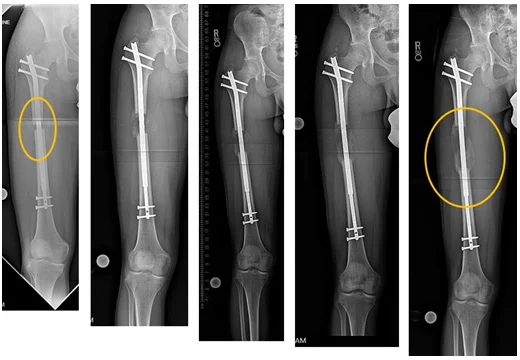
The leg lengthening procedure we use today was first conceived by Soviet surgeon Gavriil Abramovich Ilizarov in 1951. This procedure involves cutting a leg bone (either the femur, or the tibia and fibula) into two segments. Metal pins fix these two segments to two external metal rings. These fragmented bones naturally aim to grow back together; the trick lies in increasing the distance between the two metal frames, which gradually rip the two segments apart as they heal. The new bone, in theory, fills the unnatural gap and increases the total leg length. This torturous procedure was originally a life changing surgery created to solve congenital defects resulting in a discrepancy between leg length. Now, it is also used for cosmetic purposes, to increase height – and the stakes are high.
Nerves and tendons, which are designed to fit perfectly around the original biological architecture, will not fit the artificially extended length of bone. The 7.6cm extension which Frank is aiming for may not seem significant on paper but is enough to force these delicate structures to stretch well beyond their limit. It’s therefore unsurprising that, in doing this procedure, patients risk severe chronic pain and the infamous ‘Ballerina syndrome’; a grizzly term for when the Achillies tendons are unable to accommodate the new length they are forced to cover, resulting in a permanent state of plantarflexion (and in doing so giving your walk an odd ballerina-esque tip toe patten).
As Frank found out, pain is not the only downside to this operation. The osteotomy initiates an inflammatory cascade, resulting in the production of excessive clotting factors. This pushes the patient into a hypercoagulable state and increases the risk of Deep Vein Thrombosis, DVT. Once formed, these clots become terrifying to manage and can easily dislodge into the circulation, blocking the small arteries of your lungs and resulting in a life-threatening pulmonary embolism. To prevent DVT, patients are encouraged to move as soon as possible after surgery, starting with simple leg exercises. However, even these easy movements are made difficult by the cage-like external fixators responsible for bone lengthening via internal metal nails. Not to mention the resulting inflammation that surrounds the periosteal nerve, which can exacerbate the neuropathic pain which patients have compared to “being roasted on the inside”.
The surgery is clearly not for the faint hearted, but the healing process is worse still. For the cut bones to rejoin, we rely on osteoblast differentiation stimulated by the mechanical strain. This is a slow process which, at best, is limited to 1mm per day of growth. Moreover, the angiogenesis required to supply the new bone with blood must be perfectly timed with osteogenesis. A misalignment of these processes can be catastrophic. For example, the bones may not become joined as expected, leaving gaping holes. In fact, if the rate of bone growth exceeds the capacity of the blood supply, the new tissue becomes necrosed.
Patients evidently feel such pressure to become taller that they ignore clinical advice. Frank aims for 5 painful turns of his frame per day to grow taller as quickly as possible. The recommended amount is only 4 turns. Desperate for those few centimetres, he forces his bones apart quicker than they can heal.
At the hotel near the leg lengthening clinic in Istanbul (quite literally named the Wanna Be Taller clinic), many patients are also recovering from their surgery in the hopes that their life will change for the better. It seems that the drive to be taller does not pick and choose, women and men of all heights suffer from the pain of forced bone growth. An account from one woman reveals that she was still unable to walk even eight months post-surgery, even something as minor as a rainy day can result in a frustrating flare up. “The pain never stops tormenting you”, she says.
Frank is lucky – he survives the pulmonary embolism. Another patient from Dubai was not so fortunate. When Frank is asked about whether the surgery was worth it, he surprisingly replies yes. Whilst his perspective remains puzzling to many, he later describes the torment of social discrimination he has experienced at school, and in love and dating apps, he was repeatedly rejected by women for his height.
It was an experience shared by Xiaoxi, who decided to undergo the procedure after being pushed aside by women multiple times due to his height. Aiming for an ambitious 6cm increase, he completed the surgery at a hospital that specialises in orthopaedics. Disaster struck when he suffered a post-surgery infection. In an interview about his surgery, he told the reporters that it was ‘no less [painful] than torture’. To resolve the infection, the doctors made large surgical incisions near his ankles to drain the pus and cut away the necrosed tissue. Now, if XiaoXi wants to walk for more than 1km, he must rely on a walking staff.
In China, the leg lengthening surgery is now banned due to safety concerns. The rest of the world is yet to follow, but as demands continue to rise and many take flights to have access to the surgery, it raises the question – are medical boards becoming clinically negligent about the risks of a cosmetic procedure? Driven by their desire to become taller, more attractive, and protected from ridicule, these people are a victim of warped beauty standards and societal pressures which, facilitated by these risky surgical interventions, are potentially lethal. The surgery is no doubt life changing, but is it for the better? What is the true price of the few centimeters? For some, the costs are paid in dollars, but for others, they are paid over a lifetime.
References
https://www.theguardian.com/lifeandstyle/2025/aug/17/being-short-is-a-curse-the-men-paying-thousands-to-get-their-legs-broken-and-lengthened
https://my.clevelandclinic.org/health/treatments/24316-limb-lengthening-surgery
https://www.theguardian.com/society/2025/sep/08/nhs-urges-people-to-avoid-extremely-painful-leg-lengthening-surgery
https://www.theguardian.com/lifeandstyle/2022/nov/09/would-you-have-your-legs-broken-to-make-yourself-taller-the-men-who-go-through-hell-for-a-little-extra-height
Gamal A. Hosny. Limb lengthening history, evolution, complications and current concepts.
Fei Dan. The girls that broke their legs for leg lengthening.
Frank woke up one night in “some of the worst pain he’s ever felt”, screaming whilst he struggled to breathe. The four heavy-duty ice packs on his legs did little to dull the excruciating pain and soon, he was rushed to a nearby hospital. Frank was suffering from the side effects of leg extension surgery: a life-threatening pulmonary embolism. Many patients undergo this high-risk surgery each year, withstanding long periods of suffering, to grow no more than a few centimetres.
The leg lengthening procedure we use today was first conceived by Soviet surgeon Gavriil Abramovich Ilizarov in 1951. This procedure involves cutting a leg bone (either the femur, or the tibia and fibula) into two segments. Metal pins fix these two segments to two external metal rings. These fragmented bones naturally aim to grow back together; the trick lies in increasing the distance between the two metal frames, which gradually rip the two segments apart as they heal. The new bone, in theory, fills the unnatural gap and increases the total leg length. This torturous procedure was originally a life changing surgery created to solve congenital defects resulting in a discrepancy between leg length. Now, it is also used for cosmetic purposes, to increase height – and the stakes are high.
Nerves and tendons, which are designed to fit perfectly around the original biological architecture, will not fit the artificially extended length of bone. The 7.6cm extension which Frank is aiming for may not seem significant on paper but is enough to force these delicate structures to stretch well beyond their limit. It’s therefore unsurprising that, in doing this procedure, patients risk severe chronic pain and the infamous ‘Ballerina syndrome’; a grizzly term for when the Achillies tendons are unable to accommodate the new length they are forced to cover, resulting in a permanent state of plantarflexion (and in doing so giving your walk an odd ballerina-esque tip toe patten).
As Frank found out, pain is not the only downside to this operation. The osteotomy initiates an inflammatory cascade, resulting in the production of excessive clotting factors. This pushes the patient into a hypercoagulable state and increases the risk of Deep Vein Thrombosis, DVT. Once formed, these clots become terrifying to manage and can easily dislodge into the circulation, blocking the small arteries of your lungs and resulting in a life-threatening pulmonary embolism. To prevent DVT, patients are encouraged to move as soon as possible after surgery, starting with simple leg exercises. However, even these easy movements are made difficult by the cage-like external fixators responsible for bone lengthening via internal metal nails. Not to mention the resulting inflammation that surrounds the periosteal nerve, which can exacerbate the neuropathic pain which patients have compared to “being roasted on the inside”.
The surgery is clearly not for the faint hearted, but the healing process is worse still. For the cut bones to rejoin, we rely on osteoblast differentiation stimulated by the mechanical strain. This is a slow process which, at best, is limited to 1mm per day of growth. Moreover, the angiogenesis required to supply the new bone with blood must be perfectly timed with osteogenesis. A misalignment of these processes can be catastrophic. For example, the bones may not become joined as expected, leaving gaping holes. In fact, if the rate of bone growth exceeds the capacity of the blood supply, the new tissue becomes necrosed.
Patients evidently feel such pressure to become taller that they ignore clinical advice. Frank aims for 5 painful turns of his frame per day to grow taller as quickly as possible. The recommended amount is only 4 turns. Desperate for those few centimetres, he forces his bones apart quicker than they can heal.
At the hotel near the leg lengthening clinic in Istanbul (quite literally named the Wanna Be Taller clinic), many patients are also recovering from their surgery in the hopes that their life will change for the better. It seems that the drive to be taller does not pick and choose, women and men of all heights suffer from the pain of forced bone growth. An account from one woman reveals that she was still unable to walk even eight months post-surgery, even something as minor as a rainy day can result in a frustrating flare up. “The pain never stops tormenting you”, she says.
Frank is lucky – he survives the pulmonary embolism. Another patient from Dubai was not so fortunate. When Frank is asked about whether the surgery was worth it, he surprisingly replies yes. Whilst his perspective remains puzzling to many, he later describes the torment of social discrimination he has experienced at school, and in love and dating apps, he was repeatedly rejected by women for his height.
It was an experience shared by Xiaoxi, who decided to undergo the procedure after being pushed aside by women multiple times due to his height. Aiming for an ambitious 6cm increase, he completed the surgery at a hospital that specialises in orthopaedics. Disaster struck when he suffered a post-surgery infection. In an interview about his surgery, he told the reporters that it was ‘no less [painful] than torture’. To resolve the infection, the doctors made large surgical incisions near his ankles to drain the pus and cut away the necrosed tissue. Now, if XiaoXi wants to walk for more than 1km, he must rely on a walking staff.
In China, the leg lengthening surgery is now banned due to safety concerns. The rest of the world is yet to follow, but as demands continue to rise and many take flights to have access to the surgery, it raises the question – are medical boards becoming clinically negligent about the risks of a cosmetic procedure? Driven by their desire to become taller, more attractive, and protected from ridicule, these people are a victim of warped beauty standards and societal pressures which, facilitated by these risky surgical interventions, are potentially lethal. The surgery is no doubt life changing, but is it for the better? What is the true price of the few centimeters? For some, the costs are paid in dollars, but for others, they are paid over a lifetime.
References
https://www.theguardian.com/lifeandstyle/2025/aug/17/being-short-is-a-curse-the-men-paying-thousands-to-get-their-legs-broken-and-lengthened
https://my.clevelandclinic.org/health/treatments/24316-limb-lengthening-surgery
https://www.theguardian.com/society/2025/sep/08/nhs-urges-people-to-avoid-extremely-painful-leg-lengthening-surgery
https://www.theguardian.com/lifeandstyle/2022/nov/09/would-you-have-your-legs-broken-to-make-yourself-taller-the-men-who-go-through-hell-for-a-little-extra-height
Gamal A. Hosny. Limb lengthening history, evolution, complications and current concepts.
Fei Dan. The girls that broke their legs for leg lengthening.