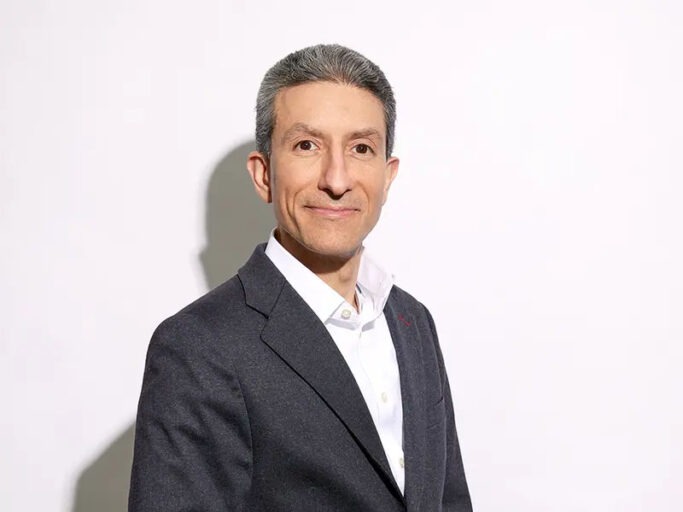
The OMSG had the privilege to interview Dr Hutan Ashrafian about his life spanning the fields of surgery, AI and entrepreneurship.
To begin, could you talk us through your training and the path that led you to where you are today?
As he outlined his career, it became evident that Ashrafian embodies the modern Ancient Greek, drawing from mathematics, physiology and philosophy.
He began as a medical student at UCL, where he was fascinated by immunology, particularly the scale of the body’s armoury wielding “combinations reaching 10 to the fourteenth power”. The “maths of medicine” propelled him into cardiothoracic surgery, inspired by pioneering figures Professor Sir Magdi Yacoub and Professor Marc de Leval, who “converged engineering and research to break down medical problems” in paediatric heart disease. Ashrafian’s own pioneering work led to the eponymous Ashrafian thoracotomy, and the Ashrafian sign of aortic regurgitation (pulsatile pseudo-proptosis, for any aspiring cardiologists).
Then came mentorship by one of Britain’s greatest modern surgeons, Professor Lord Ara Darzi, a pioneer of both keyhole and robotic surgery and architect of several healthcare reforms in Britain. This led Ashrafian to pivot both surgically and academically to a different frontier which would define the next era of his career – artificial intelligence.
“AI is pretty potent … It doesn’t only solve for today. It solves for history. It solves for the future.”
For this particular polymath, academia and a PhD at Imperial College London seemed the natural next adventure. A brief online search boasts an academic CV that inspires imposter syndrome, with a titanic 699 publications at the time of writing. So prolific is Ashrafian’s academic prowess, colleagues at Imperial are quick to point out reported rumours that he cited his own research during his Fellowship viva at the Royal College of Surgeons.
In Ashrafian’s own words, during his PhD he “used early AI to see if we could get real-world data to contextualise … mathematical argument in modern society.” He is now the Applied AI Lead of Global Health Innovation at Imperial, leading work spanning breast cancer screening, AI evaluation standards, and collaborations with industry, including helping to develop companies. This includes a certain vaccine manufacturer readers may already be familiar with – Moderna.
A keen philosopher and historian, Ashrafian modified the Turing Test “to treat it as a diagnostic accuracy problem with an index test and a gold standard” and has published books on Julius Caesar and Tutankhamun. Explaining why, he posited that “historically, people debated if medicine was an art or a science. It is both, but a mathematical base can lead to both the art and the science. AI arrived as a technology where big data, compute, and algorithms converged.”
You’ve been closely involved in breast cancer screening using AI, how did that work develop, and do you see it being implemented within the next decade?
His answer: “Yes.” Ashrafian worked in collaboration with Google DeepMind analysing mammography data from thousands of women to detect breast cancer. “The algorithm was non-inferior to the UK system of two radiologists and outperformed the US single-reader system.” Whilst privacy and data security are widely cited issues in developing AI, his study “found that keeping patients central to the team was vital, and almost no one opted out because they trusted the NHS as the data controller.”
By working on this, however, he quickly realised there were significant discrepancies in the standards used to evaluate the performance and bias of AI in research. Characteristically, he produced founding principles that every AI must be “must be Testable, Understandable, Reliable, free from Bias, and Operable (TURBO).”
Do you have any thoughts on the future of prostate cancer screening?
“PSA as a lone snapshot is insufficient. We need to augment it with multi-omics, digital biomarkers, and lifestyle tools to reach an accuracy of 99% with a false positive rate of less than 0.5%. We should use our energy to innovate solutions that stop people from dying rather than just arguing for screen or no screen.”
What role do you think pre-emptive and precision medicine will play over the next 30 years?
“Preemptive medicine is the future… care will move from hospitals to the home ecosystem. Your watch, clothes, jewelry, and even the glasses you drink from will be the diagnostic tools of the future.”
This expansion of data, he explains, will require “multi-agent AI using federated and swarm systems to communicate, much like the neuronal architecture of the brain.” What exactly does this mean?
- Multi-agent AI uses many independent but cooperating systems to analyse different data streams, rather than relying on a single model.
- These systems can learn collaboratively through federated AI, which allows insights to be shared without centralising sensitive data.
- Coordinating this distributed intelligence is swarm intelligence, inspired by natural systems such as ant colonies or bird flocks, where adaptive behaviour emerges from simple interactions rather than top-down control.
What has your experience been like working across academia, industry, and policy, including collaborations with organisations such as DeepMind?
Ashrafian is an advocate for the collaboration. His view is that complex problems are best suited to complementary experts including clinicians, academics, industry experts or politicians, all working in tandem.
“The boundaries between university, industry, and politics are blurring.”
Beyond scientific research, he advocates applying AI to the humanities, particularly philosophy. As seems obligatory for anyone in AI, he strays into provocative questions of intelligence and consciousness, but with a twist: could AI one day experience mental health issues? He reasons that as systems progress toward artificial general intelligence (AGI) and potentially artificial superintelligence (ASI) with sufficient cognitive capability and reasoning, mental health pathology may emerge, perhaps as a marker of humanity itself.
As an avid ancient historian, he works with the Classics department at the University of Oxford to deploy AI in deciphering ancient languages and analysing historical disease. . “Sources suggest [Julius Caesar] had epilepsy, but he likely suffered from transient ischaemic attacks and cardiovascular disease. He would have benefited from the Framingham study and statins!” Ashrafian has published several books on the health of figures such as Caesar and Tutankhamun, completing the ouroboros from medicine to technology to art and back again.
Finally, what advice would you give to today’s medical students?
“Don’t only follow orthodoxy; follow innovation. The application of AI will make the most difference in healthcare and life. You are in the right profession at a world-changing inflection point. Be data savvy.”
The OMSG had the privilege to interview Dr Hutan Ashrafian about his life spanning the fields of surgery, AI and entrepreneurship.
To begin, could you talk us through your training and the path that led you to where you are today?
As he outlined his career, it became evident that Ashrafian embodies the modern Ancient Greek, drawing from mathematics, physiology and philosophy.
He began as a medical student at UCL, where he was fascinated by immunology, particularly the scale of the body’s armoury wielding “combinations reaching 10 to the fourteenth power”. The “maths of medicine” propelled him into cardiothoracic surgery, inspired by pioneering figures Professor Sir Magdi Yacoub and Professor Marc de Leval, who “converged engineering and research to break down medical problems” in paediatric heart disease. Ashrafian’s own pioneering work led to the eponymous Ashrafian thoracotomy, and the Ashrafian sign of aortic regurgitation (pulsatile pseudo-proptosis, for any aspiring cardiologists).
Then came mentorship by one of Britain’s greatest modern surgeons, Professor Lord Ara Darzi, a pioneer of both keyhole and robotic surgery and architect of several healthcare reforms in Britain. This led Ashrafian to pivot both surgically and academically to a different frontier which would define the next era of his career – artificial intelligence.
“AI is pretty potent … It doesn’t only solve for today. It solves for history. It solves for the future.”
For this particular polymath, academia and a PhD at Imperial College London seemed the natural next adventure. A brief online search boasts an academic CV that inspires imposter syndrome, with a titanic 699 publications at the time of writing. So prolific is Ashrafian’s academic prowess, colleagues at Imperial are quick to point out reported rumours that he cited his own research during his Fellowship viva at the Royal College of Surgeons.
In Ashrafian’s own words, during his PhD he “used early AI to see if we could get real-world data to contextualise … mathematical argument in modern society.” He is now the Applied AI Lead of Global Health Innovation at Imperial, leading work spanning breast cancer screening, AI evaluation standards, and collaborations with industry, including helping to develop companies. This includes a certain vaccine manufacturer readers may already be familiar with – Moderna.
A keen philosopher and historian, Ashrafian modified the Turing Test “to treat it as a diagnostic accuracy problem with an index test and a gold standard” and has published books on Julius Caesar and Tutankhamun. Explaining why, he posited that “historically, people debated if medicine was an art or a science. It is both, but a mathematical base can lead to both the art and the science. AI arrived as a technology where big data, compute, and algorithms converged.”
You’ve been closely involved in breast cancer screening using AI, how did that work develop, and do you see it being implemented within the next decade?
His answer: “Yes.” Ashrafian worked in collaboration with Google DeepMind analysing mammography data from thousands of women to detect breast cancer. “The algorithm was non-inferior to the UK system of two radiologists and outperformed the US single-reader system.” Whilst privacy and data security are widely cited issues in developing AI, his study “found that keeping patients central to the team was vital, and almost no one opted out because they trusted the NHS as the data controller.”
By working on this, however, he quickly realised there were significant discrepancies in the standards used to evaluate the performance and bias of AI in research. Characteristically, he produced founding principles that every AI must be “must be Testable, Understandable, Reliable, free from Bias, and Operable (TURBO).”
Do you have any thoughts on the future of prostate cancer screening?
“PSA as a lone snapshot is insufficient. We need to augment it with multi-omics, digital biomarkers, and lifestyle tools to reach an accuracy of 99% with a false positive rate of less than 0.5%. We should use our energy to innovate solutions that stop people from dying rather than just arguing for screen or no screen.”
What role do you think pre-emptive and precision medicine will play over the next 30 years?
“Preemptive medicine is the future… care will move from hospitals to the home ecosystem. Your watch, clothes, jewelry, and even the glasses you drink from will be the diagnostic tools of the future.”
This expansion of data, he explains, will require “multi-agent AI using federated and swarm systems to communicate, much like the neuronal architecture of the brain.” What exactly does this mean?
- Multi-agent AI uses many independent but cooperating systems to analyse different data streams, rather than relying on a single model.
- These systems can learn collaboratively through federated AI, which allows insights to be shared without centralising sensitive data.
- Coordinating this distributed intelligence is swarm intelligence, inspired by natural systems such as ant colonies or bird flocks, where adaptive behaviour emerges from simple interactions rather than top-down control.
What has your experience been like working across academia, industry, and policy, including collaborations with organisations such as DeepMind?
Ashrafian is an advocate for the collaboration. His view is that complex problems are best suited to complementary experts including clinicians, academics, industry experts or politicians, all working in tandem.
“The boundaries between university, industry, and politics are blurring.”
Beyond scientific research, he advocates applying AI to the humanities, particularly philosophy. As seems obligatory for anyone in AI, he strays into provocative questions of intelligence and consciousness, but with a twist: could AI one day experience mental health issues? He reasons that as systems progress toward artificial general intelligence (AGI) and potentially artificial superintelligence (ASI) with sufficient cognitive capability and reasoning, mental health pathology may emerge, perhaps as a marker of humanity itself.
As an avid ancient historian, he works with the Classics department at the University of Oxford to deploy AI in deciphering ancient languages and analysing historical disease. . “Sources suggest [Julius Caesar] had epilepsy, but he likely suffered from transient ischaemic attacks and cardiovascular disease. He would have benefited from the Framingham study and statins!” Ashrafian has published several books on the health of figures such as Caesar and Tutankhamun, completing the ouroboros from medicine to technology to art and back again.
Finally, what advice would you give to today’s medical students?
“Don’t only follow orthodoxy; follow innovation. The application of AI will make the most difference in healthcare and life. You are in the right profession at a world-changing inflection point. Be data savvy.”