

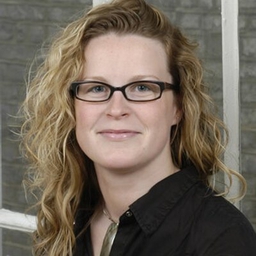
This year the one word on my mind is ‘trust’. I’m seeing how hard-earned trust in accurate information is being eaten away by algorithms that incentivize getting a reaction over truth or the public interest. Misinformation researcher Renée DiResta dubs this the “fantasy–industrial complex”, calling out those who farm falsehoods for likes online. Their approach, as DiResta puts it, is “if you make it trend, you make it true”.1
I write the Nature Briefing — a science newsletter from the news team of the journal Nature. I feel incredibly fortunate that readers trust me to give them evidence that they can use to help make their own informed decisions. Everything I do is about earning and maintaining that trust. And as medics, all the research suggests that you also have a unique part to play.
People trust science — just look at how liars ape its vibe
Overall, research indicates that trust in science and scientists globally remains high.2 For me, this is highlighted by the way that those who hold stock in undermining the scientific consensus co-opt the language of science communication (such as boring charts!) to wrap their own inaccurate messages in the borrowed cloak of scientific respectability.
For example, sociologist Anton Törnberg analysed thousands of posts by key players in the climate-denial movement in Sweden and found that people who seek to contradict climate research online often adopt the aesthetics of science while portraying climate advocates as emotional and irrational.3 These ‘merchants of doubt’ clearly respect the power of science to influence people’s decisions (some even are actual scientists — the term comes from the 2010 book4 by Naomi Oreskes and Erik Conway about the tobacco-industry playbook of harnessing a handful of contrarians to undermine the scientific consensus).
It’s clear that people have an appetite for accurate information, but the good stuff is all mixed up in a maelstrom of all sorts of content — so people are turning to others they trust to help them navigate it. That’s where we come in.
What works to combat misinformation — doctors have a key role
Experts who study misinformation tend to recommend solutions that mix some combination of regulation (including by imposing moderation responsibilities onto technology companies) and education (such as ‘prebunking’5 and media literacy6). As people who live in democratic societies, our role in this is mainly as members of civil society and as voters.
Another underappreciated aspect is that companies are unintentionally supporting misinformation via their online advertising: according to a 2024 US study, companies that place their online ads programmatically using ad exchanges — such as the Google Display Network — are ten times7 more likely to wind up advertising on misinformation sites than those that do not. Sometimes this is no accident: Google, for example, has pulled its over £1 million in funding for the fact-checking organisation Full Fact — a move that Full Fact believes is “influenced by the perceived need to please the current US administration”.8 As consumers, we have a role in making companies uncomfortable when they help to pay the bills for lies.
Taking action as a voter and consumer is good general advice, but as medics you are in a very special position when it comes to helping connect people with reliable information. The evidence seems to be clear: people trust their healthcare providers even on polarized topics where trust is under fire. The most trusted source of information on vaccines for US parents, for example, is pediatricians, according to a recent survey9 by health-policy research group KFF. And a 2023 systematic review found that consistent, clear recommendations from trusted health-care professionals were the best for increasing vaccine uptake among pregnant women.10
Science communication is not ‘us versus them’
Trust must go both ways. As a science journalist — and someone from a family of doctors — I know how frustrating it can be to have discussions that hinge on misinformation. But in a recent Nature feature11 that gave evidence-based tips for talking to someone that is hesitant about vaccines, step one was to listen, not judge. “It’s wrong to assume that people are ignorant, irrational or have naively swallowed online misinformation,” it said. People’s questions can be driven by shared values — such as protecting the health of our families — or legitimate questions.
I’ve seen this first-hand. I have the pleasure of having a million-strong audience who can simply hit ‘reply’ and tell me how I’m doing — a big change from writing regular bylined news stories! One of the hardest and best lessons that I’ve had to learn is that people do not belong in the boxes we might be tempted to fit them in. They will always surprise me with new perspectives on something about which I assumed I already knew how they would think. That has transformed the way I think about communicating scientific evidence and helped me reduce that temptation to judge.
As vaccine-hesitancy researcher Elżbieta Drążkiewicz puts it, “conspiracy theories do not exist in a vacuum. They amplify existing fears and ideas about people’s place in the world.”12 I think this message is especially important for those of us whose backgrounds did not undermine our trust in institutions. Some people have excellent reasons for thinking that authorities do not have their best interests at heart; particularly among minoritized communities (the complex legacy of J. Marion Sims13, the ‘father of modern gynecology’, is one worth learning about). And the effects can be deadly: reports about the measles outbreaks in North America tend to mention the anti-vaccine stance of US health secretary Robert F. Kennedy Jr, but the issue is bigger than one bogeyman: the outbreaks took hold in undervaccinated Mennonite communities where the COVID pandemic eroded already-shaky trust in the healthcare system.14
I’ve mentioned vaccine hesitancy a lot because much good, recent research is on this topic. But across the board, the evidence seems to confirm that there are no shortcuts to building the trust required for effective science communication. The 2023 review of what increased the uptake of maternal vaccines found it was better when doctors spoke “face-to-face” and “addressed women’s concerns, dispelled myths and highlighted benefits”. These are conversations. If we want to do the work, we must seek out those conversations.
2026 will put trust to the test
The topic of trust is not new, but in 2026 it will face intensifying challenges. Those well-funded ‘merchants of doubt’ who seek to undermine science for their own gain tend to align themselves with populist political movements; the coming year is likely to see them handed more influence in the United Kingdom and elsewhere, and their increasing ascendency in the White House.
Applications of AI will continue to flood the market, for better and for worse. For journalists and clinicians, the pressure to adopt such tools will be intense. Key for us will be the courage to interrogate how these tools might unintentionally interact with aspects of our work that are difficult to quantify — the work that takes place where trust is built. In my ongoing conversations with readers, I am learning that communication between people isn’t just a tool or even an art — it seems to connect with ideas of reciprocity and prosociality that live way down in our core instincts. Whether we are interacting with readers or patients, our work is the practice, and not just the simulacrum, of care.
For me, there is no more pressing moment to dig deeper under the surface of what motivates people to seek evidence-based information and how best to ensure they get it. What keeps me going is the fact that I’m in a position to make a difference — I hope that, as medical students, you feel inspired to seize the opportunities that come with your choice of career.
- In her book Invisible Rulers, misinformation researcher Renée DiResta documents her stormy personal and professional journey into what she describes as the “fantasy–industrial complex”. The book’s title refers to online influencers who farm falsehoods for likes — their approach, as DiResta puts it, is “if you make it trend, you make it true”. https://www.nature.com/articles/d41586-024-02917-1 ↩︎
- A survey, conducted in 68 countries between November 2022 and August 2023, found that 75% of respondents said that they trusted scientists5. In a separate study across 70 countries, conducted by the Global Listening Project between July and September 2023, 71% of respondents said that they had high trust in science (see go.nature.com/3qyawpb). And the 2024 Edelman Trust Barometer, an annual online survey of 28 countries conducted by the Edelman Trust Institute in November 2023, found that 74% of respondents trust scientists to tell the truth about new innovations and technologies6. https://www.nature.com/articles/d41586-025-01068-1 ↩︎
- https://www.anthropocenemagazine.org/2025/11/looks-like-science-lies-like-propaganda-inside-a-new-wave-of-climate-misinformation/ and “Our findings reveal a paradoxical communication strategy: the movement appropriates scientific aesthetics – graphs, statistics, and technical imagery – to contest the scientific consensus, projecting rationality, authority, and masculine self-control. In contrast, climate advocates are depicted through emotionally charged, feminized, and irrational imagery.” https://www.tandfonline.com/doi/full/10.1080/09644016.2025.2557684 ↩︎
- https://en.wikipedia.org/wiki/Merchants_of_Doubt ↩︎
- https://www.nature.com/articles/d41586-024-01587-3#:~:text=emptive%20correction%20%E2%80%94%20or%20%E2%80%98-,prebunking,-%E2%80%99%20%E2%80%94%20and%20it%20can ↩︎
- e.g. DiResta: “instead of sticking your head in the sand, pre-emptively release the facts and prebunk falsities before an alternative reality begins to take on a life of its own. This coheres with what I know about fighting misinformation: prevention is better than cure.” https://www.nature.com/articles/d41586-024-02917-1 ↩︎
- “Wajeeha Ahmad, a doctoral candidate at Stanford University in California, and her colleagues show that companies are ten times more likely to wind up advertising on misinformation sites if they advertise using exchanges.” https://www.nature.com/articles/d41586-024-01618-z ref https://www.nature.com/articles/s41586-024-07404-1 ↩︎
- https://fullfact.org/technology/google-cuts-funding-to-full-fact/#:~:text=influenced%20by%20the%20perceived%20need%20to%20please%20the%20current%20US%20administration ↩︎
- “Pediatricians are the most trusted source of information on vaccines, according to a recent survey by the nonpartisan group KFF. Some 85% of parents said they trust their pediatrician a “great deal” or “fair amount” when it comes to information on vaccines. Only a third of parents said the same of Robert F Kennedy Jr, the HHS secretary.” https://www.theguardian.com/us-news/2025/nov/11/pediatricians-vaccines-flu-season ↩︎
- https://doi.org/10.1093/jtm/taad138 “At the patient level, clear recommendations from healthcare professionals backed by text reminders/written information were strongly associated with increased vaccine uptake, especially tailored face-to-face interventions, which addressed women’s concerns, dispelled myths and highlighted benefits.” ↩︎
- https://www.nature.com/articles/d41586-025-01771-z ↩︎
- https://www.nature.com/articles/d41586-022-00879-w ↩︎
- https://pmc.ncbi.nlm.nih.gov/articles/PMC11480236/ ↩︎
- https://www.cbc.ca/news/canada/calgary/alberta-mexican-mennonite-measles-vaccine-hesitancy-outreach-1.7601715 ↩︎


