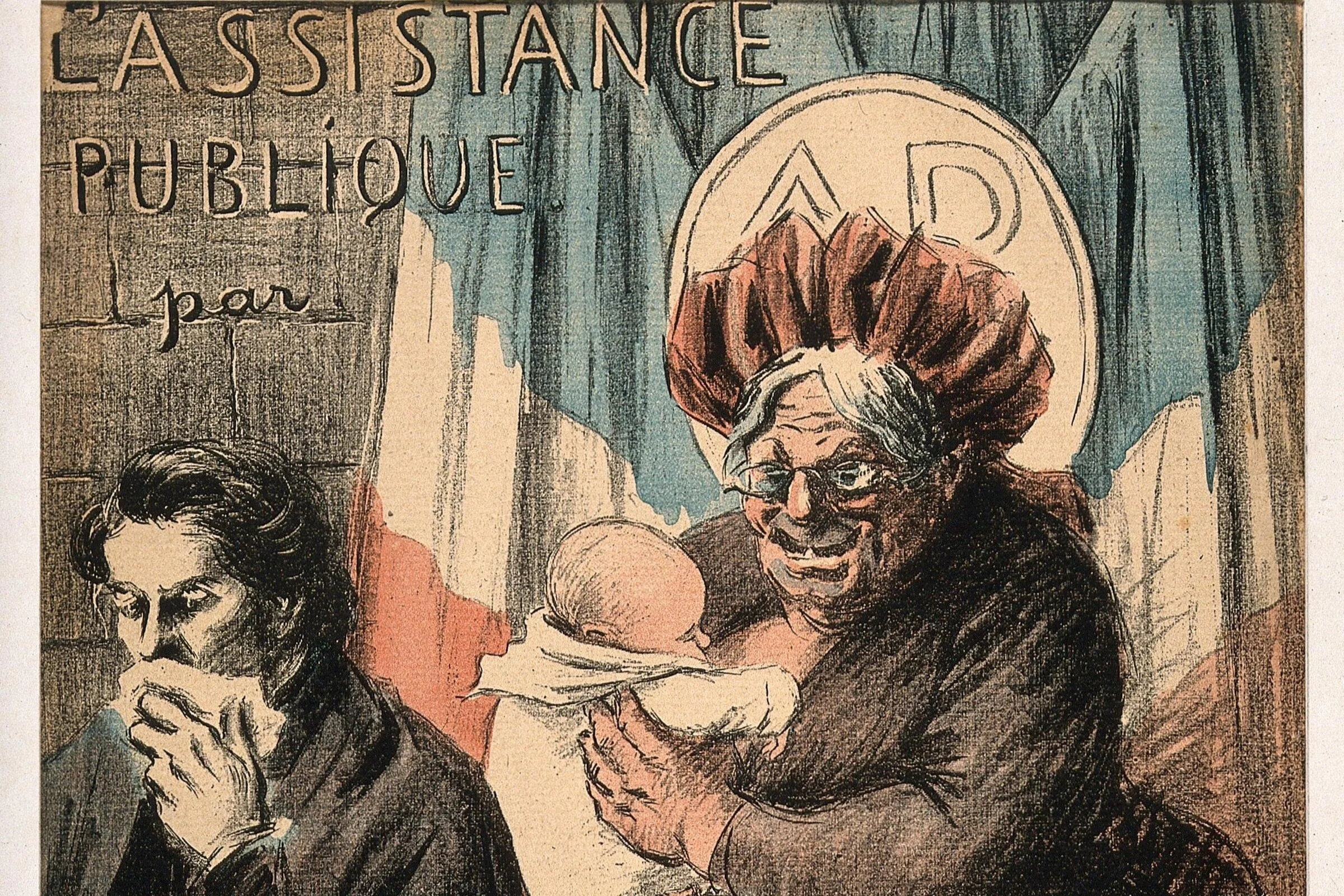
The ‘nanny state’ is an effective term. The expression has been weaponised by industry (i.e. Big Alcohol, Big Food) and used as a threat: ‘nanny states’ treat competent adults like children, coercing them into living healthy lives. Attempts by academics to reclaim the concept as creating safe environments for our families and limiting the extent to which strong industry players can exploit the weak, have been unsuccessful. It is dangerous that such a small phrase has given industry so much manipulative power, pushing politicians into thinking that inaction on necessary public health policy is acceptable. Most of the public don’t even have strong libertarian leanings: a Health Foundation poll found that the majority of people across all political leanings support more restrictive government interventions on tobacco, alcohol and healthy eating. The public want politicians to step up into their role to tackle this non-communicable disease crisis that is posing a major threat to population health and the NHS. Industry manipulation of the term discourages politicians from doing so. This leads us to ask two important questions:
Firstly, is the term ‘nanny state’ still relevant? If a population are willing to be ‘nannied’ for specific interventions, are the measures coercive? In the current UK climate it seems that the term is outdated. It was coined in 1954 by the Conservative Minister of Health, who described the ‘perishing nonsense of a plan for a 70 m.p.h. speed limit even on motorways’ as ‘nannying’. Since then, industry with vested interests have used it to protect their own backs. Big Tobacco, for example use ‘nanny’ to undermine public health measures so tobacco sales remain high. The term has served its time as a slur and a perverse distraction from efforts to create an equitable environment which supports making healthy choices. However, it would be irrational to think that those who shout ‘Nanny!’ would give it up easily. Instead of trying to eliminate the term from public debate, we should try adding a contender to the mix. What’s worse: being a little too paternalistic, or seeing preventable suffering skyrocket under your tenure? The concept of neglect could be a powerful tool. If politicians make decisions based on fear of voter opinion, then they should fear being labelled ‘The Neglectful State’. State intervention via public health policy is necessary to prevent any further neglect to our population.
Secondly, where does this leave us with the ethical interrogation of the government’s role in population health? Name-calling and loud industry voices are not excuses for this debate to be put on the backburner: policy has power, and power has potential for harm. We should take objections to the ‘nanny’ policies seriously; not least to avoid cancel culture and uphold freedom of speech, but also because critiques can inform better and fairer policy. A pertinent objection to ‘nanny’ is that ‘harder’ policies (such as the recent sugar tax extension and ‘smokefree generation’ plan) are inequitable. The choices available to lower income groups become most limited, forcing a decision in which they lose out in one way or another. Yet these ‘harder’ policies are necessary: they are effective at improving health, where ‘softer’ measures alone (such as tax-breaks for ‘cycling to work’ schemes and the recent ‘bang in some beans’ initiative) cannot. Ideally, restrictive policies should be combined with positive measures which increase healthy choice: for example a junk food tax balanced with the provision of vegetable vouchers. The extent of ill health in the UK is terrifying: we are the most obese Western nation, and there is an 18-year gap in healthy life expectancy between the most and least affluent areas. In order to ‘nanny’ competently, governments will have to listen to both public health experts and ‘nanny’ critics to avoid causing harm and increasing inequality.
Surely we can all agree that health is a crucial asset for happiness and employment. Demonising public health is therefore an avoidable folly. As Adam Briggs of The Health Foundation notes: ‘The point of public health is not to create this soulless state whereby everybody has to live off cabbage leaves and walk around at a certain speed and not bump into one another. The point of public health is to create a place where people can live life in their fullest extent.’. Moving forward with public health action, we will need to be better ‘nanny’ detectives: are they shouting ‘Nanny!’ due to vested interests, or to raise genuine ethical concerns? And are we brave enough to shout ‘Neglect!’?
The ‘nanny state’ is an effective term. The expression has been weaponised by industry (i.e. Big Alcohol, Big Food) and used as a threat: ‘nanny states’ treat competent adults like children, coercing them into living healthy lives. Attempts by academics to reclaim the concept as creating safe environments for our families and limiting the extent to which strong industry players can exploit the weak, have been unsuccessful. It is dangerous that such a small phrase has given industry so much manipulative power, pushing politicians into thinking that inaction on necessary public health policy is acceptable. Most of the public don’t even have strong libertarian leanings: a Health Foundation poll found that the majority of people across all political leanings support more restrictive government interventions on tobacco, alcohol and healthy eating. The public want politicians to step up into their role to tackle this non-communicable disease crisis that is posing a major threat to population health and the NHS. Industry manipulation of the term discourages politicians from doing so. This leads us to ask two important questions:
Firstly, is the term ‘nanny state’ still relevant? If a population are willing to be ‘nannied’ for specific interventions, are the measures coercive? In the current UK climate it seems that the term is outdated. It was coined in 1954 by the Conservative Minister of Health, who described the ‘perishing nonsense of a plan for a 70 m.p.h. speed limit even on motorways’ as ‘nannying’. Since then, industry with vested interests have used it to protect their own backs. Big Tobacco, for example use ‘nanny’ to undermine public health measures so tobacco sales remain high. The term has served its time as a slur and a perverse distraction from efforts to create an equitable environment which supports making healthy choices. However, it would be irrational to think that those who shout ‘Nanny!’ would give it up easily. Instead of trying to eliminate the term from public debate, we should try adding a contender to the mix. What’s worse: being a little too paternalistic, or seeing preventable suffering skyrocket under your tenure? The concept of neglect could be a powerful tool. If politicians make decisions based on fear of voter opinion, then they should fear being labelled ‘The Neglectful State’. State intervention via public health policy is necessary to prevent any further neglect to our population.
Secondly, where does this leave us with the ethical interrogation of the government’s role in population health? Name-calling and loud industry voices are not excuses for this debate to be put on the backburner: policy has power, and power has potential for harm. We should take objections to the ‘nanny’ policies seriously; not least to avoid cancel culture and uphold freedom of speech, but also because critiques can inform better and fairer policy. A pertinent objection to ‘nanny’ is that ‘harder’ policies (such as the recent sugar tax extension and ‘smokefree generation’ plan) are inequitable. The choices available to lower income groups become most limited, forcing a decision in which they lose out in one way or another. Yet these ‘harder’ policies are necessary: they are effective at improving health, where ‘softer’ measures alone (such as tax-breaks for ‘cycling to work’ schemes and the recent ‘bang in some beans’ initiative) cannot. Ideally, restrictive policies should be combined with positive measures which increase healthy choice: for example a junk food tax balanced with the provision of vegetable vouchers. The extent of ill health in the UK is terrifying: we are the most obese Western nation, and there is an 18-year gap in healthy life expectancy between the most and least affluent areas. In order to ‘nanny’ competently, governments will have to listen to both public health experts and ‘nanny’ critics to avoid causing harm and increasing inequality.
Surely we can all agree that health is a crucial asset for happiness and employment. Demonising public health is therefore an avoidable folly. As Adam Briggs of The Health Foundation notes: ‘The point of public health is not to create this soulless state whereby everybody has to live off cabbage leaves and walk around at a certain speed and not bump into one another. The point of public health is to create a place where people can live life in their fullest extent.’. Moving forward with public health action, we will need to be better ‘nanny’ detectives: are they shouting ‘Nanny!’ due to vested interests, or to raise genuine ethical concerns? And are we brave enough to shout ‘Neglect!’?