
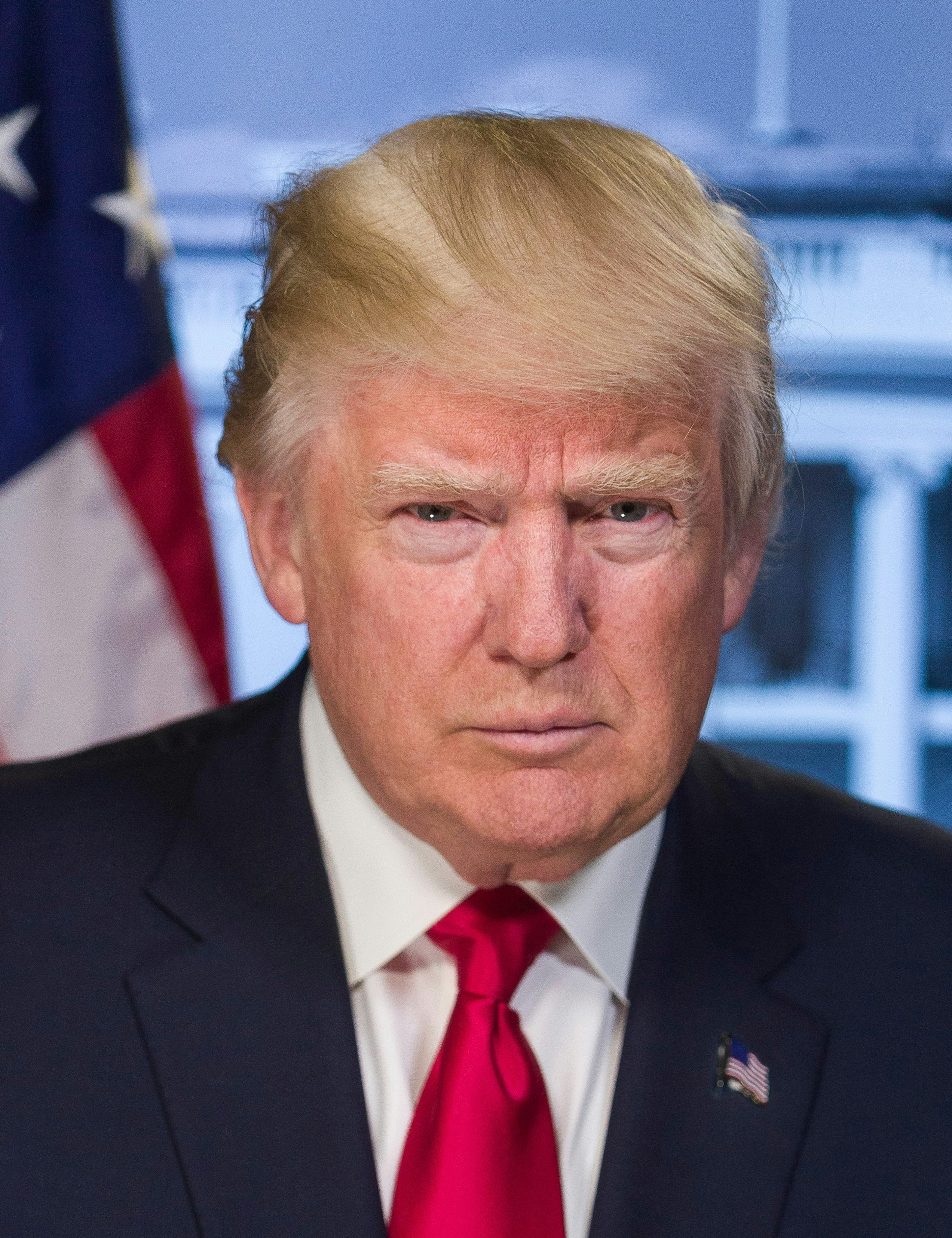
‘Fully fit to carry out all duties of the Commander-in Chief and Head of State,’ the concluding statement of US President Donald Trump’s annual health report read. Released in May, following widespread media speculation about Trump’s health over the past year, this report was meant to reassure, and assert the image of Trump as a healthy, fit individual. Yet, in an age where fake news is rife, and self-image is key, can everything in this report be trusted?
Images of make-up covering bruises on both Trump’s hands have been circulating in the press over the last year, with the report ascribing this to frequent handshaking in combination with aspirin therapy (prescribed prophylactically). Trump has previously been seen to boast about overdosing on aspirin, taking 325mg daily compared to his doctors’ recommendations of 81mg, saying in a Wall Street Journal interview, ‘I don’t want thick blood pouring through my heart. I want nice, thin blood.’
During several high-profile events, such as the FIFA Club World Cup final and G7 summit events, pictures were taken of Trump’s swollen ankles, which, combined with the bruising on his hands, sparked concerns over Trump’s health. This provoked the White House to release a statement diagnosing Trump with chronic venous insufficiency (CVI), a condition where blood pools in the lower legs resulting in oedematous ankles. CVI is a benign and common condition, affecting between 10 to 35% of people of Trump’s age, and can be easily treated by wearing compression stockings. The recent health report does allude to ankle swelling, stating ‘slight lower leg swelling was noted, with improvement from last year.’
When describing Trump’s cardiovascular health, the recent report caused confusion amongst cardiologists. AI-enhanced electrocardiogram analysis estimated Trump’s cardiac age to be 14 years younger than his chronological age, although a description of what these AI-enhanced features were was not included. The report also did not provide key information to show that cardiac function was ‘normal’. A coronary CT angiography reportedly showed ‘no arterial obstruction’, although having no blockage would not rule out arterial stenosis. Coronary CT angiography is not a primary imaging technique for assessing cardiovascular health and is typically deployed where coronary artery disease is already suspected. Cardiologists were concerned about the lack of data on ejection fraction, with the most recent report stating only that Trump’s ejection fraction was ‘preserved.’ Trump’s health report from 2018 contained numbers on his ejection fraction, which raises questions about why this data has not been mentioned in the 2026 report.
There are several other discrepancies in the most recent health report. Trump’s blood pressure has seemingly gone down from 128/74 mmHg in last year’s report to 105/71 mmHg this year – an unusual drop considering there is no mention of blood pressure medication, and his use of statins are only meant to have a modest effect on blood pressure. An exaggerated height and underestimate of Trump’s weight are also potential points of misinformation in the report.
Signing off the document is Captain Sean Barbabella, physician to the president. This final medical stamp of approval gives the report an official and reputable air. However, Trump’s annual publication of health reports clearly serves a political purpose. Trump is the oldest presidential candidate to be inaugurated at 78 years old. By releasing these health reports, Trump can control the narrative around himself and his health, portraying himself as a physically capable, fit president. This is especially in contrast to his predecessor, Joe Biden, who has been diagnosed with stage four prostate cancer.
It may be wrong to present misleading statements in health reports; however, it is important to remember that in a clinical setting Donald Trump is also just a patient. He is entitled to patient confidentiality and is not obliged to publicise any of his health information. The Goldwater rule, an ethical guideline created by the American Psychiatric Association, prevents psychiatrists from providing professional opinions on public figures without explicit authorization. This rule could arguably be extended to the medical profession in general. We don’t know Trump’s actual patient history, his medical problems and his medications. Therefore, making assumptions about his health and capabilities based on limited information from the annual health reports, paparazzi shots and press releases could be seen as rash and premature.
Yet Trump is directly responsible for leading a nation of over 300 million people, the largest economy in the world and a nuclear arsenal. His role as president of the US means that Trump is incredibly involved in international diplomatic affairs. It is imperative that he is in an able condition to carry out these demanding roles. Reports of Trump falling asleep during high profile events, such as during the sombre Memorial Day ceremony, are concerning. Trump’s genuine health problems are unlikely to be revealed in public health reports, so it is important that if the medical profession identifies any reason that would prevent Trump from carrying out his leadership responsibilities to the full, they blow the whistle accordingly. In an age of geopolitical tensions, economic insecurity and environmental concerns, the US president’s health cannot afford to be a point of dispute.